Recent Work
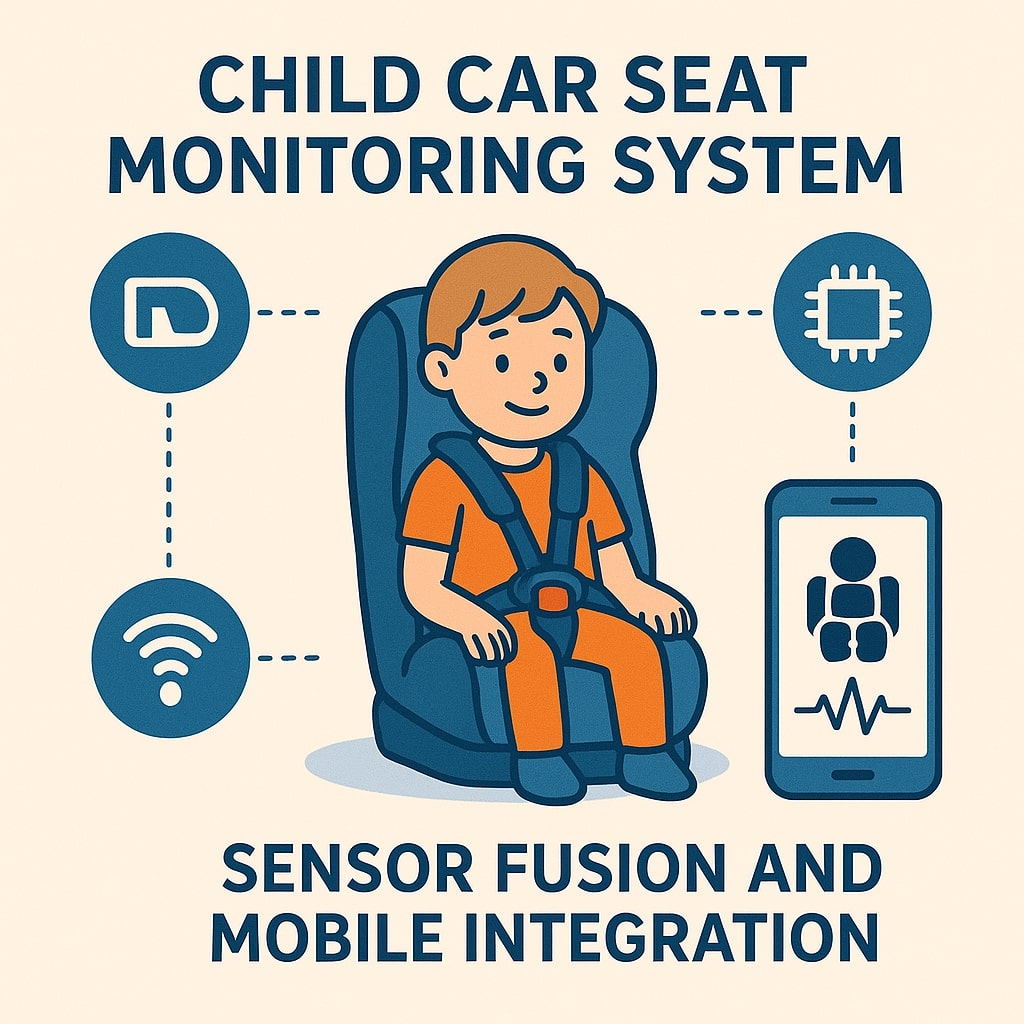
Child Car Seat Monitoring System with Sensor Fusion and Mobile Integration
This project consists of the development of a smart child car seat monitoring system that enhances child safety in vehicles by using a multi-sensor IoT approach integrated with mobile and web technologies. The system is based on an ESP32 microcontroller and combines various environmental and presence sensors to monitor real-time conditions. It pairs with a mobile device to ensure that the child is not left unattended and can trigger alerts when unsafe conditions are detected. Key Features: • Sensor Suite Integration: • Temperature and Humidity Sensor: Monitors internal vehicle conditions. • Pressure Sensor (Seat Pad): Detects child presence on the seat. • mmWave Presence Sensor: Senses micro-movements to detect life signs. • Magnetic Sensor: Checks if the seatbelt is properly fastened. • Gas Sensor (CO): Detects dangerous carbon monoxide levels in the vehicle cabin. • Mobile Pairing: • Bluetooth or BLE connection between the ESP32 and a mobile device. • Distance estimation and disconnection alerts to notify if the guardian moves too far from the vehicle. • Emergency Notification System: • Sends SMS alerts with GPS coordinates to predefined emergency contacts if unsafe conditions are detected (e.g., high temperature, child left behind, unfastened seatbelt). • Cross-Platform Mobile App: • Developed with Flutter, the app provides real-time monitoring, alert management, and pairing settings. • Backend and Data Processing: • Node.js and Python services manage sensor data ingestion, SMS gateway, and notifications. • MongoDB stores historical data, user profiles, device configurations, and geolocation logs. Technology Stack: • Embedded Systems: ESP32 firmware in C/C++ with FreeRTOS for multi-tasking. • Mobile Development: Cross-platform app in Flutter (Dart) with Bluetooth and map integration. • Backend: RESTful API in Node.js and sensor processing logic in Python. • Database: MongoDB for flexible data modeling and real-time queries. • SMS and GPS: Integration with mobile communication modules (SIM7000L - LTE) and GPS modules (NEO-6M). Skills and Disciplines Applied: • Electronics: Sensor interfacing, analog/digital signal processing, power management. • Software Development: Embedded firmware, API development, Flutter mobile app. • IoT Communication: Bluetooth/BLE pairing, MQTT, GPS data parsing. • Safety & Usability: Child safety logic, alert thresholds, user-friendly mobile UI.This project demonstrates the integration of IoT, mobile development, and cloud systems with a focus on real-world safety applications. It reflects strong proficiency in ele ctronics, programming, and full-stack application development.
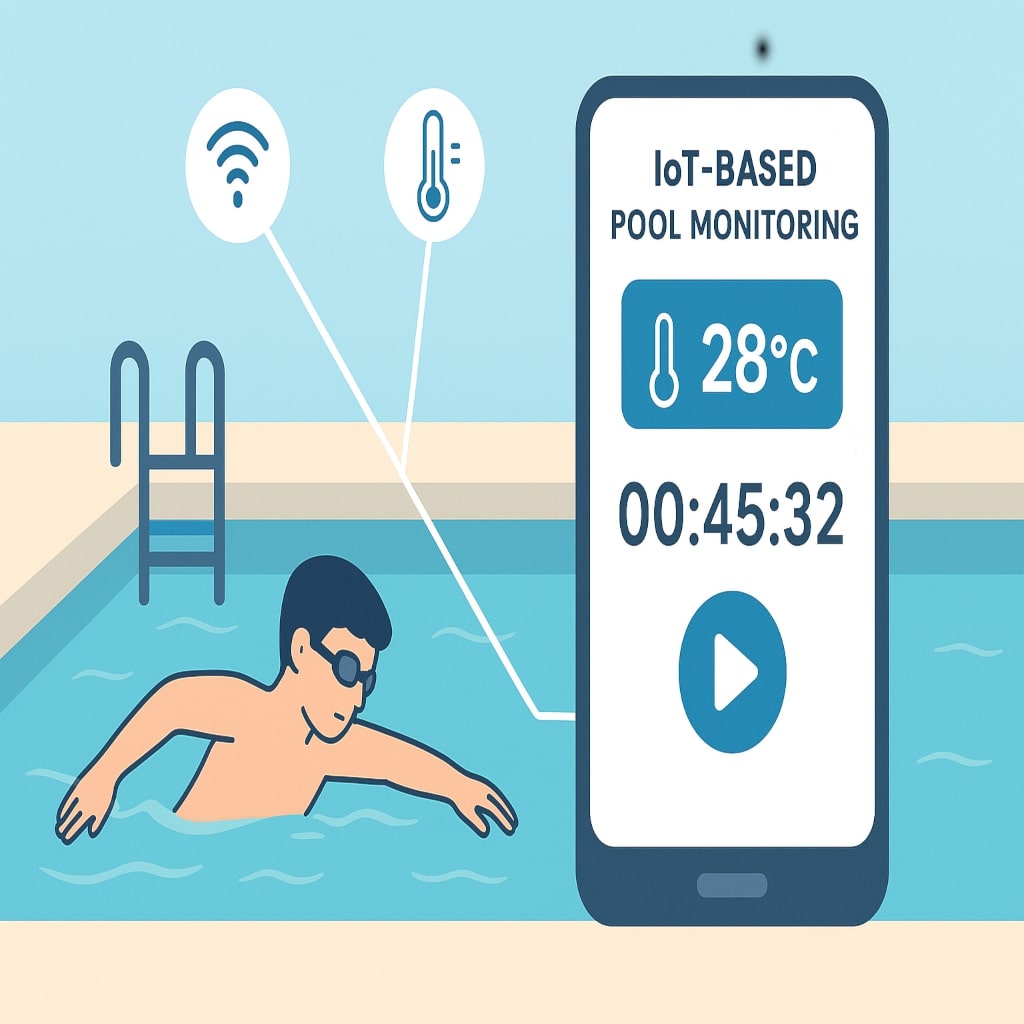
IoT-Based Swimming Pool Monitoring and Timing System
This project involves the design and implementation of an IoT-enabled swimming pool management and timing system, aimed at improving athlete performance monitoring, pool condition tracking, and training logistics through sensor integration and a web platform. System Overview: The core of the system is an ESP32-based microcontroller that collects data from several sensors deployed in the pool environment: • Pressure Sensors at Pool Ends: Detect swimmer contact to measure lap times with high precision. • pH Sensor: Continuously monitors water quality. • Water Temperature Sensor: Measures pool water temperature. • Air Temperature Sensor: Measures ambient temperature around the pool. The ESP32 transmits the collected data wirelessly to a Raspberry Pi, which acts as a loca l web server. Web Platform Architecture: • Frontend: Built with HTML/CSS/Javascript, providing an accessible interface for all user types. • Backend: Developed in Node.js, responsible for processing sensor data, managing user actions, and generating training analytics. • Database: SQL Server used for structured storage of sensor logs, user data, training sessions, and swimmer records. User Roles and Functionalities: 1. Pool Administrator: • Full control over system configurations. • Monitors real-time sensor readings (pH, temperature, pressure). • Manages swimmer profiles, training types, and pool scheduling. 2. Coach/Trainer: • Views pool condition reports and swimmer performance data. • Schedules training sessions (date, time, training type). • Analyzes timing statistics to track swimmer progress. 3. Swimmer (Athlete): • Accesses personal lap time history. • Views upcoming scheduled training sessions. • Tracks individual improvements over time. Technologies and Skills Applied: • Embedded Electronics: ESP32 firmware developed in C/C++, interfacing with pressure, temperature, and pH sensors.• IoT Communication: Wireless data transfer using Wi-Fi to Raspberry Pi via HTTP/ MQTT protocols. • Web Development: • HTML/CSS/Javascript for frontend UI. • Node.js for backend logic and RESTful APIs. • SQL Server for relational data storage and reporting. • System Integration: Device-to-cloud data flow, real-time updates, user role-based access control. This project showcases a full-stack IoT solution combining sensor technology, embedded systems, and web application development with clear role-based user interaction, tailored for sports and infrastructure monitoring environments.
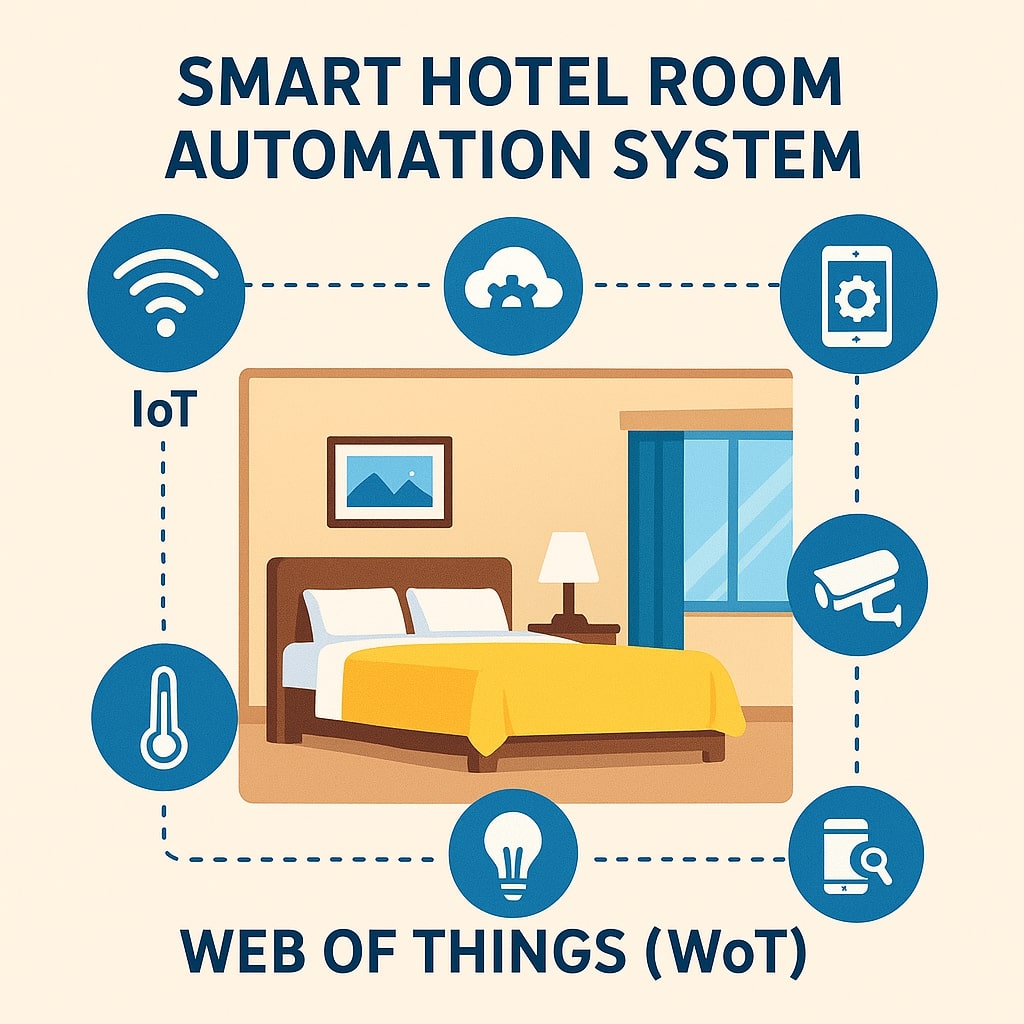
Smart Hotel Room Automation System using IoT and Web of Things (WoT)
This project involves the development of an intelligent hotel room control system leveraging IoT and the Web of Things (WoT) framework to provide seamless, interoperable automation of multiple in-room systems. The solution enhances guest comfort and operational efficiency through web-based access and standardized device communication. The system enables centralized and distributed control of: • Temperature Monitoring & Control: Automated regulation based on real-time sensor data and occupancy. • Smart Blinds/Shutters (Estores): Controlled via schedule, light levels, or guest preferences. • Door Access Management: Secure room access via RFID, mobile app, or digital keys. • Fire Alarm System: Early fire detection through smoke and temperature sensors, with immediate alerting. • Water Usage Monitoring: Real-time tracking for consumption awareness and sustainability. • Automatic Air Conditioning (HVAC): Dynamic control based on environmental data and user-defined thresholds. Web of Things Architecture Highlights: • Thing Descriptions (TD): Each device exposes a standardized WoT Thing Description in JSON-LD, describing its properties, actions, and events. • Interoperability: Devices communicate using common web protocols (HTTP, Web Sockets) and data formats (JSON, JSON-LD), enabling vendor-agnostic integration. • WoT Servients: Devices act as WoT Things or Consumers, running lightweight WoT runtimes for local control and cloud interaction. • Security: OAuth2 and secure communication channels ensure authenticated access and privacy. Technologies and Skills Applied: • Electronics: Integration of environmental sensors, actuators, and fire detection modules. • Programming Languages: • C/C++ for embedded firmware (ESP32/Arduino). • JavaScript/Node.js for WoT runtime and orchestration. • Python for backend services and analytics. • Communication Protocols: MQTT, HTTP/REST, WebSockets, and WoT scripting APIs. • Visualization: Web dashboard with real-time status and map integration using modern web technologies.This project showcases advanced integration of IoT devices with web technologies, following Web of Things standards to ensure scalability, interoperability, and future- proof deployment in smart hospitality environments.
Smart Waste Bin Monitoring System using IoT, LoRa, and MQTT
This project consists of the design and implementation of an IoT-based smart waste bin monitoring system, aimed at optimizing urban waste collection through real-time volumetric measurements. The system utilizes ultrasonic sensors to measure the fill level of garbage containers and transmits the data using LoRa (Long Range) technology to a central gateway. Data is then published to an MQTT broker, enabling integration with dashboards and interactive maps for visualization of bin status and location. The solution is designed to reduce unnecessary waste collection trips, improve operational efficiency, and support sustainable urban waste management. Key features include: • Sensor Integration: Use of ultrasonic or infrared sensors for fill-level detection.• LoRa Communication: Low-power wide-area communication suitable for long- distance transmission in urban environments. • MQTT Protocol: Lightweight and efficient data transmission to a central server or cloud-based platform. • Real-Time Dashboard: Web interface or mobile application showing bin status and location on maps. • Alerts and Thresholds: Notification system for bins nearing capacity. • Power Efficiency: Battery-powered devices optimized for low consumption. This project involved applying knowledge in electronics (sensor interfacing, power management), as well as programming skills in languages such as C/C++ (for microcontroller development), Python/JavaScript (for backend and visualization), and JSON/REST APIs for data communication and integration.

Tematic Park
The project consists of the development of a graphical user interface application designed to support visitors in a theme park environment. Implemented in Java and structured according to object-oriented programming principles, the system integrates multiple software design patterns to ensure modularity, maintainability, and scalability. The application allows users, through touch-screen kiosks located at the park entrance, to acquire tickets by selecting destinations on an interactive map. It dynamically calculates the optimal route using Dijkstra’s algorithm, considering either distance or cost as criteria, and generates both tickets and invoices in PDF format. The application architecture is divided into several packages: a Dijkstra package for pathfinding and cost calculation, a Graph package to manage vertices and edges, and a JavaFX package implementing the MVC pattern to separate the user interface from business logic. Additional modules include a Logger with a Singleton pattern for activity tracking, a Manager package to handle paths, statistics, and tickets, a Memento package to store and restore previous routes, a PersistDAO package enabling persistence through serialization and SQLite, and a Template package for PDF generation of invoices and tickets. Throughout development, design patterns such as MVC, Strategy, Singleton, DAO, Template, and Memento were applied to improve system organization and extensibility. Furthermore, refactoring practices were adopted to address issues like duplicated code, long methods, and data classes. Overall, the project demonstrates how software engineering principles and algorithmic solutions, particularly Dijkstra’s shortest path, can be effectively applied to create an interactive and practical solution for real-world navigation and ticketing scenarios in a theme park setting.
Rent IT
Rent_IT is an innovative e-commerce platform built with Django (Python framework), designed to connect individuals and businesses who want to rent out products or services with customers looking for affordable, short-term access. Unlike traditional online stores that focus only on selling, Rent_IT provides a rental-based marketplace, making it easier for users to save money, reduce waste, and access what they need only for the time they need it. How it Works Product/Service Listing Owners can create an account and list their items or services (e.g., electronics, tools, vehicles, event equipment, or even professional services). Each listing includes a description, price per rental period, availability calendar, and security conditions. Search & Discovery Customers can browse categories, use filters, or search directly for the product/service they need. The platform highlights nearby options, rental duration, and total cost. Booking & Payment Once the customer finds a suitable listing, they can request a rental for specific dates. Payments are handled securely within the platform, including deposit options when necessary. Confirmation & Delivery/Pick-Up The owner accepts the request and arranges delivery or pick-up. Both parties can track the rental status through the website. Return & Review At the end of the rental period, the customer returns the item or service access ends. Both parties can leave reviews, helping to build trust in the community. Key Features Developed with Django/Python, ensuring scalability, security, and maintainability. User-friendly interface with personalized dashboards for owners and renters. Secure online payments and optional deposits for high-value rentals. Ratings & reviews to ensure transparency and trust. Availability calendar for easy scheduling and conflict avoidance. Category-based navigation to make browsing intuitive. Responsive design for access on desktop, tablet, or mobile. Benefits Customers save money by renting instead of buying. Owners earn passive income from underused assets. The community reduces waste and promotes sustainability through the shared economy model.